
A Guide to Switching Rubber Manufacturers

TL;DR – What to Know Before Changing Rubber Manufacturers
- Consider switching rubber manufacturers when recurring quality problems, missed deliveries, rising costs, or limited engineering support begin affecting production.
- Prepare part drawings, material specifications, production volumes, quality requirements, approved samples, and existing tooling information before approaching a new supplier.
- Existing molds can often be transferred, but ownership, condition, dimensions, and compatibility with the new manufacturer’s equipment must be evaluated first.
- Reduce transition risk by maintaining adequate part inventory, transferring complete technical documentation, and qualifying tooling and trial parts before moving full production.
Request Information for Changing Rubber Manufacturers
Switching between rubber manufacturers can feel risky, especially when downstream production or final assemblies rely on high-quality rubber parts. Even when quality, delivery, or communication challenges exist with a current supplier, many manufacturers delay switching because they worry about transferring tooling, matching materials, qualifying new parts, or disrupting production.
A well-planned switch between rubber manufacturers can minimize these risks, reduce costs, and produce a better final product. The key to this overhaul is treating the process as a controlled production transfer, rather than simply sending a drawing to another molder.
Lake Erie Rubber helps manufacturers examine existing molded rubber parts, tooling, material requirements, production volumes, and concerns with the current production process before making any recommendations toward qualified production. Whether the project involves transferring an existing mold for an individual part, replacing existing tooling, or reshoring overseas production, the steps outlined in this guide can make the rubber manufacturer switch more manageable and beneficial.
When Should You Consider Switching Between Rubber Manufacturers?
Changing suppliers is typically not a result of a single delayed order or isolated part defect. This desire to switch builds over several months of inconsistencies, communication lapses, and product failures, indicating that the current manufacturer can no longer reliably support the project. There are several common factors expressed by manufacturers before switching between rubber manufacturers.
Recurring Quality Problems & Defects
Changes in part quality or consistency are the leading cause for manufacturers to switch their rubber molders. Any of these factors can then contribute to premature cracking, swelling, or loss of elasticity and strength during final use.
- Dimensional inconsistencies
- Excessive flash
- Surface imperfections
- Incorrect material hardness
- Wrong elastomers
- Failed inspections
Problems with component quality are not simple to diagnose either, as there are considerable instances where things could go wrong. Things like worn tooling, inconsistent rubber/elastomer composition, poor material handling, inadequate equipment, improper curing, and unstable molding conditions are all points where quality defects can be introduced.
Changing Lead Times & Missed Deliveries
Late shipments happen, and good manufacturers are prepared to handle a day or two delay in the supply of a key part. But when this continues to happen, becomes overly prolonged, and parts are not arriving when they should, OEMs are right to step in and examine the problem to identify a better solution. Missing deliveries of seals, gaskets, rollers, boots, or other molded rubber parts may prevent certain assemblies from being completed, putting all production at a standstill. Early warning signs are:
- Supplier is frequently changing or revising lead times and delivery dates
- Production delays come with no explanation
- Inability to support forecasted volumes
- Poor communication about order status
- Insufficient capacity to handle scaling or peak demand
Limited Engineering & Material Support
Projects evolve and so, too, do the rubber parts and designs that allow those jobs to be successful. Custom rubber molding typically requires more than producing a part from a supplied drawing. Any supplier that is unable or unwilling to provide technical support or design for manufacturability solutions may struggle when it is time to redesign a part, change elastomers, increase production volume, or troubleshoot on-going production challenges.
Manufacturers should find a rubber molding company that acts as a partner who is invested in the success of the part and can help evaluate tolerances, identify molding concerns, find the right rubber, refine the tooling, or resolve current failures in the production process.
Rising Production Costs
Rising costs are inevitable, but those seeking the lowest quoted part pricing do not always mean you’ll receive the lowest overall cost. Seeing an increase in your unit pricing is just the start with an inconsistent rubber manufacturer. Supplier performance and your total overall costs should also include:
- Value of scrap and rejected parts
- Rework and sorting
- Additional inspections
- Inconsistent part quantities
- Overseas freight and tariffs
- Engineering and production time spent managing concerns
Switching rubber manufacturers may be justified when quality and supply-chain costs consistently begin to outweigh any of the savings found in a reduced unit cost.
Ready to Switch: What Your New Rubber Manufacturer Needs
For companies ready to switch to a new rubber manufacturer, it’s important to compile a complete technical folder for your project (s) so the new manufacturer can quickly identify part requirements and potential risks.
Part Drawings & Models
Your new rubber manufacturer will ask for the latest available engineering or design information to understand how it will work with their equipment, processes, and expertise. This includes:
- Two-dimensional part drawings
- CAD or 3D model files
- Critical dimensions, tolerances, or specifications
- Surface finish requirements
- Parting-line and flash limitations
- Various sub-assemblies or assembly details
- Any packaging and labeling requirements
Older or legacy parts may not have a complete folder of technical records; in that case, you should be prepared to provide samples, existing molds, assembly information, or end-use application requirements to help the new manufacturer reverse-engineer the part.
Required Elastomers
Any qualified rubber manufacturer will understand the manufacturing requirements for natural and synthetic elastomers. Providing a detailed set of information surrounding the end-use requirements will allow engineers to determine the correct rubber for the part and other factors that may impact performance. This includes:
- Elastomer type (synthetic or natural)
- Durometer (rubber hardness)
- Operating temperature range
- Chemical, oil, fuel, or solvent exposure
- Outdoor, UV, or ozone exposure
- Compression-set and tensile strength requirements
- Preferred colors
- Regulatory, material, or industry standards
With decades of experience working on industrial rubber molding projects, the most commonly specified include EPDM, nitrile, silicone, FKM (Viton), neoprene, natural rubber, and SBR. The correct material choice is based on the end performance requirements rather than finding the lowest cost rubber.
Production Volume & Forecasting
Providing expected volume to your new manufacturer allows them to understand the tooling design, cavity counts, molding method, material purchasing, and production planning in their facility. As this is likely not the only job they will process, finding how to integrate your projects into their existing workflow requires some creative manipulation. Prepare to provide:
- Expected annual part count
- Typical order quantities
- Order frequency
- Current expected lead times
- Any higher-than-expected demand periods
- Minimum on-hand inventory requirements
- Expected future growth
Quality & Performance Documentation
Lastly, it’s important to understand how your new rubber molder will handle quality standards and production documentation requirements for more advanced projects. Lake Erie Rubber is an ISO 9001-certified rubber manufacturer, meaning they adhere to strict regulations for documentation, inspection, traceability, and validation records. To help ease the transition to a new manufacturer, prepare to provide the following:
- Approved samples
- First article inspection reports (FAI)
- Material certifications
- Dimensional inspection plans
- Functional testing procedures
- Corrective action history
Can I Transfer My Existing Rubber Mold Tooling?
Yes, existing rubber molds can be transferred from one manufacturer to another. However, the process can be complicated, and it should never be assumed that your new service provider will accept tooling from another manufacturer. The first step is to confirm who owns the tooling. Ownership may be documented through initial purchase orders, invoices, contracts, tooling agreements, or other documents detailing the original partnership. The current supplier must be willing and able to release the mold for transfer.
After ownership is established and the release is confirmed, the new rubber manufacturer will evaluate the following conditions before starting any kind of production. If the presence of these conditions makes the tooling unusable, conversations will be had to determine the cost of refurbishment or developing brand new tooling.
- Overall mold condition
- Presence of wear, damage, or corrosion
- Mold dimensions and cavity count
- Tooling material
- Heating requirements
- Press size and tonnage requirements
- Compression, transfer, or injection molding
- Maintenance and repair history
Even if a mold performed adequately on your original molder’s equipment, that does not mean it will seamlessly transition to another facility where the equipment brand, sizes, tonnage, and capacity may vary. It’s important to align molds and tooling to the equipment to generate the highest-quality rubber parts possible.
How Long Can This Switch Take?
There is no universal transition timeline for moving rubber part production from one supplier to another. This is a process that requires documentation, planning, and conversations to pull together, especially on large projects with dozens of parts and high-volume production requirements. The schedule depends on the completeness of the technical information folder (detailed above), tooling availability, mold condition, compound requirements, part complexity, testing procedures, and approval process.
Any transfer involving quality tooling, complete drawing files, and an established material specification is generally less complex or time-consuming than a project requiring reverse engineering, compound changes, mold repair, or engineering new tooling.
Can I Reduce Risk When Switching Rubber Companies?
Yes, there are several ways that you can reduce risk during this transition and help protect production continuity and part quality. It’s critical, typically before making the switch, to confirm tooling ownership as soon as possible. This will dictate how the rest of the transfer proceeds and provide a rough estimate of the expected timeline.
It is also recommended to ensure that you have enough inventory of critical parts to make the transfer without producing gaps in production. Having enough parts on hand also makes it easy to provide example parts to the new manufacturer so they can validate the material and finished design features, and identify any challenges that may arise during production.
Why Transfer Rubber Molding Production to Lake Erie Rubber?
Lake Erie Rubber supports manufacturers who have experienced challenges, quality defects, communication problems, and overall production inconsistencies with their existing rubber part providers. As a facility specializing in custom rubber part design and production, Lake Erie Rubber is comfortable taking on a variety of different rubber component production projects that leverage its capabilities, certifications, and equipment.
- Certifications: Lake Erie Rubber is an ISO 9001-certified rubber manufacturer that applies stringent quality management practices and standards to every aspect of part production. From material certification to part inspection and final documentation, our team ensures each component exceeds customer expectations before leaving.
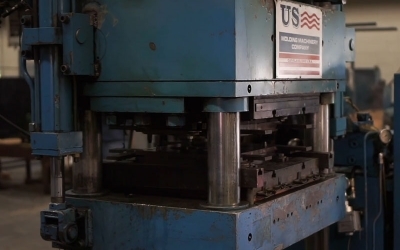
- Equipment: Lake Erie is home to one of the largest and most sophisticated collections of rubber molding equipment in the United States. This includes multiple 700-ton Desma injection molding machines, an 800-ton Panstone compression press, and 600-ton US Molding injection molding presses with large platens.
- Engineering & DFM: Our team can review part drawings and files to evaluate them for functional production and apply design for manufacturability services to refine part features to make final runs more efficient and cost-effective.
- Communication: Lake Erie Rubber is proud to provide hands-on customer service and support throughout the process. From initial inquiry emails to production meetings and part reviews, the team excels at engaging with customers on the status of their projects and staying ahead of any possible complications that may delay shipments or downstream workflows.
- American-Made: Based in Erie, PA, Lake Erie Rubber has a long history of supporting industrial projects throughout the country. Our rubber parts have been used throughout the mining, rail, energy production, and transportation sectors for decades and continue to meet the evolving needs of American OEMs. Lake Erie Rubber is proud to be recognized as one of the country’s top custom rubber molders by RFQUSA.
Considering a Change in Rubber Manufacturers?
Send Lake Erie Rubber your part drawings, material specifications, production quantities, approved samples, and available tooling information. Our team can evaluate the project, identify potential transition risks, and determine the best path for transferring your rubber molding production.
Request a Production Transfer Review
FAQs About Switching Rubber Manufacturers
Can I transfer an existing rubber mold to a new manufacturer?
Existing molds can often be transferred if the customer owns the tooling and the current supplier releases it. The new manufacturer must inspect the mold for condition, dimensions, press compatibility, and repair requirements before confirming that it can be used.
What happens if my current rubber mold cannot be transferred?
A new mold may be manufactured from existing tooling drawings, CAD files, part drawings, or approved samples. In some cases, the part can be reverse-engineered when complete records are unavailable.
Can a new manufacturer match my existing rubber compound?
A new supplier can evaluate the material specification, test data, application conditions, and performance requirements. An identical proprietary formula may not be available, but an equivalent compound may be selected or developed and validated.
Does switching rubber manufacturers always require new tooling?
No. Existing tooling may be transferred and reused, but it must first be evaluated for ownership, condition, compatibility, and remaining service life. Repairs, modifications, or replacement may be recommended when the mold cannot produce reliable parts.
How can we avoid production interruptions while changing suppliers?
Maintain safety stock, provide complete technical documentation, keep the current source active during qualification when possible, and approve trial parts before transferring full production.
What should I provide for a rubber molding production transfer quote?
Provide part drawings, CAD files, material specifications, annual volumes, typical order quantities, inspection requirements, approved samples, tooling information, and details about any quality or delivery issues that need to be corrected.
Can Lake Erie Rubber reproduce a legacy part without complete drawings?
Potentially. Existing samples, molds, assembly information, application conditions, and available specifications can help determine whether the component can be measured, reverse-engineered, tooled, and validated.