
Custom Rubber Seals
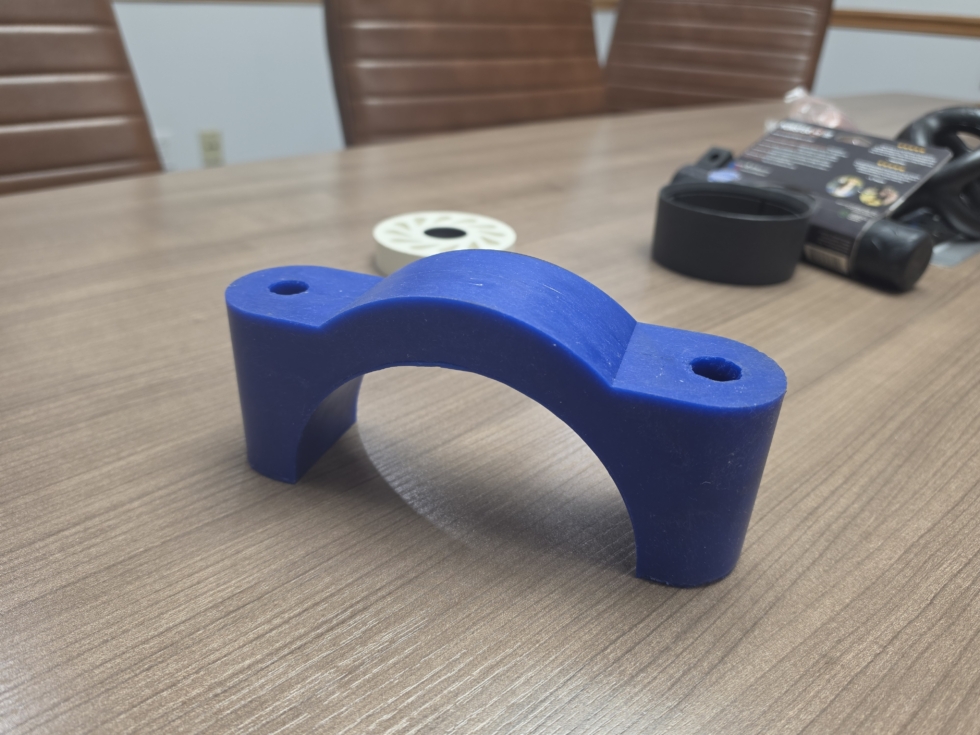
Custom Rubber Seals for Industrial Applications
Standard rubber seals may not match the dimensions, geometry, or operating conditions of every application. A custom seal may need to contain process media, exclude contaminants, and fit a specific assembly. Meeting all of those specifications in one component can be challenging.
At Lake Erie Rubber, we provide custom rubber seals based on each customer’s equipment and service requirements. Our technical input helps customers turn those requirements into a manufacturable part. Read on to learn more about seal applications, operating motion, compounds, molding processes, and industrial uses.
Request a Quote for Custom Rubber Seals
When Applications Require Custom Rubber Seals
Custom molding may require new or revised part-specific tooling, engineering review, and production planning. Those added steps make the sourcing process different from ordering a standard catalog seal. Engineers and buyers should confirm that a custom part is necessary before paying for tooling.
The following application conditions help engineers determine when custom molding is the appropriate choice:
Nonstandard geometry: A stock seal may not seat or compress as required when the gland, housing, shaft, or mating surface falls outside available dimensions.
Recurring leakage: Replacing a failed seal with the same standard profile will not correct leakage caused by improper compression, uneven contact, or an unsuitable cross-section.
Unavailable motion profile: Custom molding may be appropriate when the required seal profile is not available for the specified movement.
Unavailable specification combination: Custom molding may be needed when no catalog seal combines the required dimensions, profile, and elastomer.
Obsolete components: Custom molding can replace a discontinued seal when the equipment remains serviceable, but the original part is no longer available.
How Lake Erie Rubber Reduces Custom Seal Risk
At Lake Erie Rubber, we do more than mold a supplied drawing. A custom seal must meet its part specification and remain practical to manufacture at the required volume. Our engineering and manufacturing teams address both needs during project development.
Your project requirements determine which of the following in-house services are needed before and during production:
Application review: We review drawings, CAD files, existing samples, and application requirements to understand the intended part performance before tooling begins.
Design for manufacturability: We evaluate part geometry, shrinkage, draft angles, flash locations, and applicable gate locations before mold design to improve moldability and production efficiency.
Mold tooling: Our in-house design engineer and CAD/CAM team can help design, manufacture, revise, or repair rubber molds.
Prototype development: Prototype iterations can be produced for testing and review before the approved part moves into a larger production run.
Quality documentation: Our ISO 9001-certified quality system supports production documentation and traceability.
Custom Rubber Seals by Operating Motion
Seal applications are classified as static or dynamic based on the intended relative movement between the seal and adjoining components. Movement at the sealing interface affects seal compression, component clearance, and mating-surface requirements. Sliding applications also require attention to speed, lubrication, friction, and heat.
Static Sealing Applications
Static seals operate between components that have no intended relative movement after assembly. O-rings and other gland-mounted seals rely on controlled compression, suitable gland dimensions, and the specified mating-surface finish.
Reciprocating Custom Rubber Seals
Reciprocating applications use linear back-and-forth movement through sliding contact or the flexing and rolling action of a diaphragm. Stroke length, cycle rate, surface speed, lubrication, component clearance, and mating-surface finish affect friction and seal contact.
Rotary and Oscillating Sealing Applications
Rotary applications involve continuous shaft rotation, and oscillating applications use limited angular movement that reverses direction. Surface speed, lubrication, surface finish, runout, and concentricity require review in rotary service, and oscillating service adds rotation angle and cycle frequency.
Rotary and Oscillating Sealing Applications
Rotary applications involve continuous shaft rotation, and oscillating applications use limited angular movement that reverses direction. Surface speed, lubrication, surface finish, runout, and concentricity require review in rotary service, and oscillating service adds rotation angle and cycle frequency.
Custom Rubber Seal Compound Comparison
A rubber compound combines a base elastomer with fillers, curing agents, and other additives that control its finished properties. Compound selection depends on the sealed fluid, operating temperature, outdoor exposure, required hardness, compression set, and abrasion resistance.
These comparisons provide general guidance because fluid concentration, temperature, pressure, exposure time, and compound formulation can change material compatibility.
| Material | Performs Well With | Requires Review For |
|---|---|---|
| EPDM | Water, steam, glycol-based fluids, ozone, UV, and weather exposure | Petroleum oils, hydrocarbon fuels, and mineral greases |
| Nitrile (NBR) | Petroleum oils, diesel fuel, mineral greases, and applications involving abrasion | High-aromatic fuels, ozone, weather exposure, chlorinated hydrocarbons, and ketones |
| Silicone | Wide temperature ranges, ozone, UV, and weather exposure | Applications requiring high tear strength or abrasion resistance |
| FKM (Fluoroelastomer) | High temperatures, petroleum oils, fuels, ozone, and many chemicals | Low temperatures, hot water, steam, ketones, esters, and amines; compatibility varies by formulation |
| Neoprene (Chloroprene) | Water, weather exposure, some refrigerants, and moderate contact with mineral oils | Aromatic hydrocarbons, chlorinated solvents, ketones, esters, and ethers |
| Natural Rubber | Applications requiring resilience, tensile strength, tear resistance, or abrasion resistance | Oils, fuels, ozone, prolonged weather exposure, and elevated temperatures |
Selecting the Right Molding Process
Custom rubber molding processes differ in how they move uncured material into the cavity and apply heat and pressure. Process selection accounts for production volume, seal dimensions, geometry, compound flow, tolerance requirements, cycle time, and tooling budget.
We use injection molding, compression molding, and transfer molding to produce custom rubber seals:
Injection Molding
Injection molding forces uncured rubber into a closed, heated mold and holds it there until it cures. Short cycles and multicavity tooling generally suit mid- to high-volume seal production because more parts share the initial tooling cost.
Compression Molding
Compression molding places a measured rubber preform directly into a heated cavity and applies pressure until the material cures. Lower tooling costs make the process practical for low-volume, large, or thick seals despite longer cycle times than injection molding.
Transfer Molding
Transfer molding places an uncured rubber preform in a transfer pot and forces it through runners and gates into a heated cavity. Controlled material flow suits precise seals, complex geometries, and bonded components, but tooling generally costs more than compression molding.
Industries That Use Custom Rubber Seals
Custom rubber seals perform containment and protection functions across the following industrial sectors:
- Oil and Gas: Pipe seals, valve gaskets, O-rings, flange grommets, and diaphragm seals provide containment within oil and gas equipment.
- Rail and Transportation: Weather-resistant door seals and grommets protect door openings and cable entries on rail and transportation equipment.
- Mining and Construction: Mining equipment uses custom gaskets and flexible connectors, while construction equipment uses weather seals and expansion-joint components.
- Power Generation and Electrical: Custom seals and grommets protect electrical enclosures, cable connections, and high-voltage interfaces in power generation equipment.
- Industrial Fluid Handling: Pumps, valves, actuators, and fluid-control assemblies use custom seals and diaphragms to contain media and separate chambers.
Choose Lake Erie Rubber For Custom Rubber Seals
Custom rubber seals give engineers more control over the fit and function of a sealing component. Application requirements guide the seal geometry and compound, and production needs help determine the molding process.
At Lake Erie Rubber, we use more than six decades of rubber molding experience to manufacture seals based on customer requirements. Customers can obtain technical guidance and molded production from one U.S. manufacturer.
Click below for a quote and to learn more about custom rubber seals for your application.